Understanding the Link Between Child Development and Mental Health
Why Mental Health is Fundamental to Early Growth
A child’s mental health provides the strong foundation on which other areas of development can grow. When a child trusts and relies on their most important adult caregivers and the environment they live in, they are able to grow a healthy sense of self and learn ways to regulate and express their emotions and needs. This, in turn allows them to:
- Focus on learning,
- Try new things,
- Challenging themselves to solve problems
- Much more!
The Impact of Emotional Well-being on Physical Development
When young children experience high levels of stress without support, it can take a toll on their growing brains and bodies, sometimes leading to chronic health problems when a child grows to become an adult. However, research on early childhood adversity highlights something beautiful: the protective power of relationships. By helping children navigate challenges early on, the adults in their lives can buffer them from stress and pave the way for lifelong physical and emotional health.
Key Milestones in Children's Mental Health
There are many important factors that contribute to strong mental health and resiliency to stress for children and a number of milestones along the way. Ages when children reach these milestones can vary based on a number of factors and can depend on the values of the child’s family and culture. They can include:
- Having at least 1 adult they trust and look to for support - trusting some people more than others is healthy.
- Able to identify and communicate basic emotions and needs
- Learning to control impulses and reactions
- Learning to understand consequences for actions and make choices accordingly
- Being interested and engaged in the world around them: this is really important for learning!
- Practicing two-way communication and turn taking
Social and Emotional Learning (SEL) in Early Childhood
Some topics to focus on with your child that help them develop SEL skills are:
- Ongoing practice naming and expressing emotions
- Self-respect
- Empathy and acceptance of others
- Taking responsibility for their behavior and mistakes
- Finding creative solutions to their problems
- Learning how to socialize and relate with a diverse group of peers
- Build confidence in their strengths and abilities
Because early development is so deeply rooted in connection, supporting your child always starts with supporting you. Learning to understand your child’s emotional needs—and having the space to reflect on your own stress as a parent—is one of the most powerful gifts you can give your family. You do not have to walk this path alone.
Recognizing the Signs:
When to Seek Professional Support
Parents and caregivers often wonder about when to seek professional support. We’ll go over some signs to look for below, but it is important to know that you don’t need to wait for “enough” signs or distress to seek care. Professional support does not have to be a response to an emergency or crisis. It can be a preventative and proactive source of support for your kid and family.
If you have a feeling your child or family would benefit from some help, then you can trust that feeling and look for support!
Behavioral Challenges and Normal Developmental Stages
Young kids all go through developmental stages that involve big feelings. Parents and caregivers often wonder if their child is just “going through a phase,” or if there is a true need for more support. The Ages and Stages of Development reminds us that tantrums are a normal development for toddlers, who haven’t yet figured out how to express their feelings and frustrations. Challenging behaviors are a normal part of growing up. So if big feelings and behaviors are a typical and expected part of childhood, how can we tell when a child needs additional mental health support?
The best way to determine this is to reflect on how long the behaviors have been lasting and if they are having a negative impact on your child and on your family:
- Duration: Have the behaviors lasted longer than a few weeks to a month?
- Impact on the child: Is the problem making it hard for your child to participate in daily activities, like playing, learning, eating or sleeping?
- Impact on the family: Are the behaviors overwhelming for you, the child’s primary caregivers, siblings or other family members?
Common Mental Health Challenges in Kids
Kids, just like adults, can experience behavioral and emotional challenges when under stress. A child’s behavior are often requests for help! Because kids are still developing the capacity to identify and describe their emotions, they often show us rather than tell us how they are feeling. This may look like:
- Intense and/or frequent tantrums
- Not wanting to go to/ avoiding school
- Challenging Behavior (e.g., getting into trouble at school or fighting with peers…)
- New fears and worrying about a number of different things
- Trouble sleeping: Waking up often at night, or not wanting to fall asleep
- Changes in eating habits (like eating less, more, or only certain foods)
- Behavior that reminds you of a younger child (e.g., wetting the bed again after being fully potty trained)
Underneath these behaviors, we can find many of the same challenges that affect adults. Children can experience:
- Anxiety, fears or “phobias”
- Depression
- Trauma after a scary or surprising event
- Grief about a sad event or loss
- Difficulty adjusting to a change
- Unmet needs due to a developmental delay or an underlying disability (ie: sensory processing, attention deficit, learning difference, language disorder, etc)
It can be scary to face a challenge that has a "Important. Sounding. Title." but sometimes, if we figure out what to call something, it can help us to know what to do about it.
The Role of a Child Mental Health Specialist/ Child and Family Therapist
Mental health specialists and therapists can help act as a guide for your family when you are navigating family challenges. They can help you make sense of what your child is trying to tell you and what you can do to help them. Mental Health Specialists are a broad group of professionals who are trained in the emotional, behavioral, and developmental growth of children. Child and Family Therapists are trained mental health professionals who specialize in providing therapy to children and their families. Below, you’ll find some information about what child and family therapists do, and what kind of mental health services are available for children and families.
What Does a Child Mental Health Specialist/ Therapist Do?
Child and Family Therapists provide support for children’s mental health needs by developing a thorough understanding of the child and their family and working alongside them to create change.
During intake and the beginning phase of therapy, a Child and Family Therapist usually observes and collects information about:
- The challenge that you and your child and family are facing
- Your child’s personality and behaviors
- Your family’s strengths, culture, and values
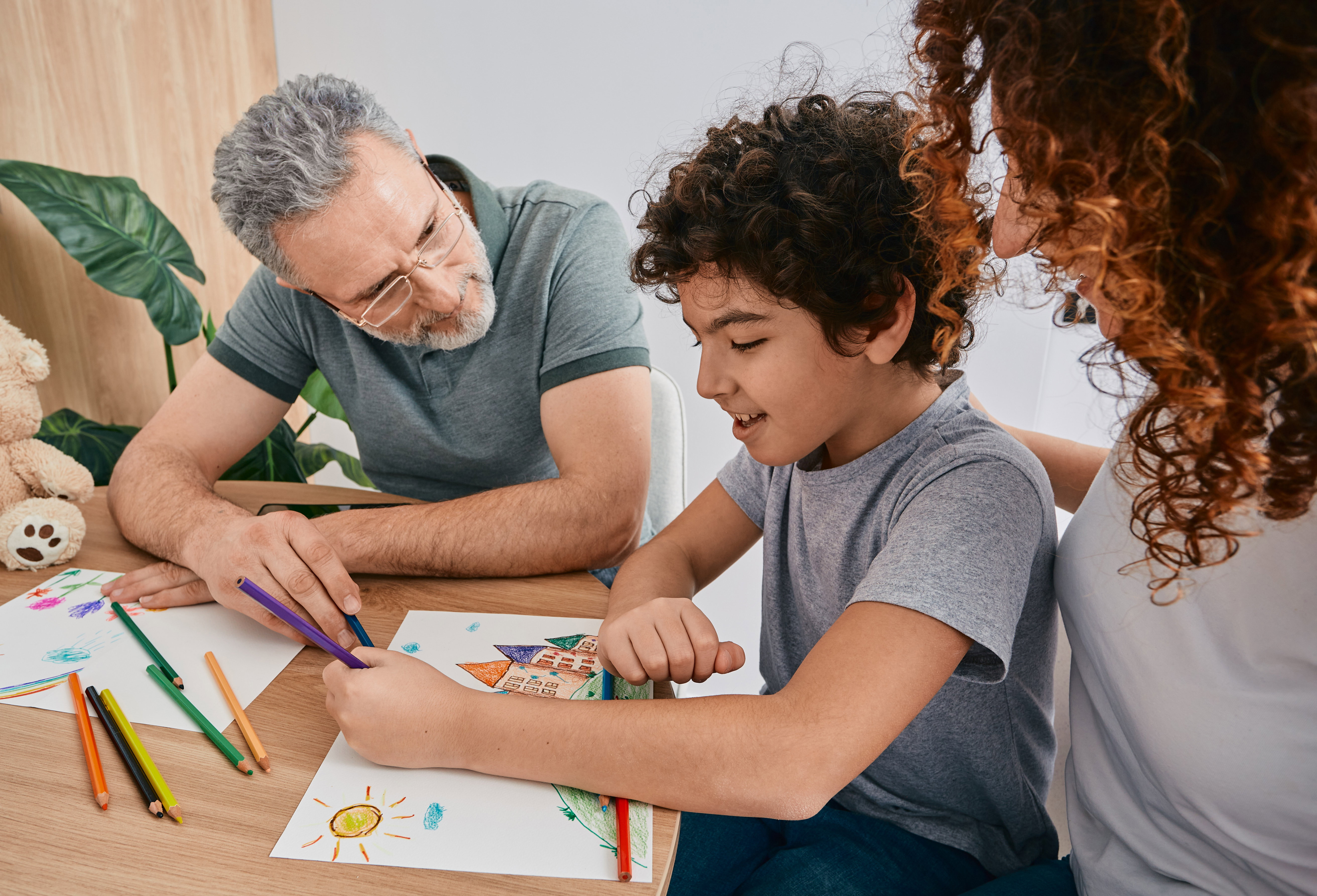
Child and Family Therapists often use play-based approaches to engage with and get to know the child. Because children are still developing the capacity to identify and express their emotions, they need nonverbal ways of expressing themselves. This usually involves using toys, games, and expressive arts. As children play, therapists observe themes and patterns that give clues about the child’s world: what they are working through, how they relate to themselves and others, and what emotions they are feeling.
Child and Family Therapists create a treatment plan tailored to what each child and family needs. Once the therapist and the family have agreed on some goals, the therapist facilitates activities, conversations and experiences that help the child make progress towards them.
Although Child and Family Therapists focus on childhood mental health, they don’t work just with the child. Rather, they see the child as part of their family system. To create meaningful changes for a child, Child and Family Therapists support the whole family.
Different Types of Therapy for Children and Families
There are many different types of therapy and help available for children and families. It is important to find approaches that make you and your child feel heard, valued, and seen. Here are some options we recommend and provide:
- Child-Parent Psychotherapy: This is a type of therapy for young kids (birth-5) and their parents and caregivers to take part in together. It supports family strengths and relationships and helps families heal after stressful experiences. It is an evidence-based treatment for trauma and challenging behaviors.
- Play Therapy: Play therapy involves the use of toys, expressive arts, and other nonverbal approaches to help children express themselves and work through their problems in a developmentally appropriate way. Play therapy is an umbrella term that includes many different treatments adapted to families’ needs.
- Parent Therapy and Workshops: Parent therapies such as Supportive Parenting for Anxious Childhood Emotions (SPACE) and Bringing Baby Home focus on helping the child through working with their parents. We hold these types of groups for parents periodically and you can find out more on our events page.
- Social learning groups for kids to build social skills and interact with peers can help children learn to interact more positively in learning and care environments with other kids.
- Support groups for parents and caregivers to share their experiences, learn together, and develop a “village” around parenting
- Parent Consultation involves a series of meetings with a professional focused on a well-defined problem or goal for a child or family. Consultation is more brief than therapy and is suited to information-gathering or problem-solving around concerns like: debriefing a child’s diagnosis, supporting a child through transitions, or observing a child’s behavior at school.
- Inclusion Support: For young children who are experiencing school-related behavioral concerns, preschool evaluations allow parents and childcare providers to work with a mental health specialist to understand the child’s behavior.
Exploring Child Mental Health Services
Community Resources and School-Based Support
There are many organizations and programs that support children and their families. Some resources to look out for include:
- Local Child and Family Counseling Centers like the Center for Early Childhood Connections in the San Francisco East Bay Area, provide in person and virtual supports for families and caregivers in a specific geographic region.
- Advocacy and Resource Organizations like the NAMI California, Parent Voices, and Zero to Three can help you learn more about and advocate for positive societal change.
- Public School- and Community -Based Services: Family Resource Network, Resource and Referral,First 5 California, and Regional Centers such as the Regional Center of the East Bay, school district behavioral health centers like OUSD’s Behavioral Health Services can help you find resources in your community that are specific to your child and family’s needs.
- Online Resources like Brightlife, the Sesame Workshop, Pathways and the CDC’s Act Early can provide you with information and free virtual support.
Finding Mental Health Support for Kids Near You
To find developmental and mental health support related to your child’s learning and community participation, you can check out the links above to research resources available in your county through regional centers, early intervention programs, and your local school district. Programs may be provided at no- or low-cost to you. A great place to start is by checking to see if your community provides free screenings through Help Me Grow. This can pinpoint exactly what kind of help your child might need. Check out our free developmental screening resources here.
If you are looking for social-emotional and mental health support related to how your child is doing at home, you can use resources and search tools like Psychology Today and in many areas, you can call your local 211 support access line to find providers in your city or zip code. Using the online resources, you can find someone who works with children near you. If you are worried about the cost, make sure to indicate “sliding scale,” or check the types of insurance plans they accept. You can also ask your child’s pediatrician for a referral for screening and evaluation.
How Parents and Caregivers
Can Support Mental Health
All parents and caregivers want their child to experience positive emotions and have a healthy way of coping with challenges, but it can feel hard to know where to start. One easy rule of thumb to start with might be, “all feelings are ok; all behaviors aren’t.” This means that we name and validate feelings while also setting limits as needed.
- Naming and validating emotions – Naming feelings helps kids understand their feelings by putting a word to what they are experiencing: sad, mad, embarrassed, annoyed, etc. Taking the additional step of validating the feeling helps kids know that what they are feeling is ok and others might feel that way too. For example, it’s very normal to feel sad when we spill the juice we wanted to drink; or to feel mad when a peer doesn’t want to share a toy; or frustrated when things don’t go our way. Validating feelings is important to creating a shame-free environment around emotions.
- Limit-setting – Setting limits is an important part of teaching our kids how to relate to themselves, others, and the world around them in healthy ways. When we set limits around feelings-driven behaviors, we can teach kids better ways to respond to big feelings. This might sound like: “it’s ok to feel mad that we’re leaving the park, but you may not hit me. If you want, you can stomp your feet instead.”
- Offering choices - You can also guide your child in managing emotions by helping them choose between two coping skills. For example, if your child is sad, you might ask them if they’d like a hug or some time alone. By offering choices such as these, you will help your child explore options for coping and empower them to know what helps them feel better.
Tips for Creating a Supportive Home Environment
Choose a comfortable and private time to talk without distractions. It's important that the child feels safe to share their thoughts and feelings without judgment.
- Be Available: Make sure your child knows that they can talk to you and/or another trusted adult when they need to.
- Let the child know explicitly and clearly that it is normal to need help. Make sure that they have heard you say, out loud, that you want them to tell you or another safe adult when they are having trouble because you care about them and want to help.
- Establishing a regular check-in time can also be helpful. Some families make it a habit to ask open-ended but specific questions (examples: “Who did you sit with at lunch today”, “What was one surprising thing that happened today?”) on the way home from school, at dinner or before bed each day.
- Think together about who else in their life they can talk to. Brainstorm some people at school, family and/ or other community locations where they spend time–that they trust to help them if they need it. Practice and role play some ways to ask for help from these people.
Open Communication:
Talking to Your Child About Feelings
To have calmer, less challenging behavior, children need to learn to channel their feelings into language and have someone they feel safe sharing with. Here are a couple of key ways you can encourage your child to share their feelings with you.
- Initiate a Conversation: Children won't always bring up hard topics on their own but still get worried by them. If you think something could be bothering your child but they aren’t bringing it up on their own, it can help your child if you start the discussion
- Use the “Third Person”: Reference characters in books or movies, or mention events in the news to talk about emotions. For instance, "That character looked really sad. Could you tell why they might feel that way?"
- Ask Open-Ended Questions: Instead of questions that are easily answered with “yes’ or “no”,, ask questions that encourage them to elaborate.
- Instead of: "Are you okay?" or "How was school?"
- Try: "What was the most surprising part of your day?" or "Who did you play with at recess?"
- Share (a little): Briefly share your own experiences with emotions or stress management to normalize the conversation. Keep it brief and focused on how you coped without overwhelming your child with your problems. Here are some examples:
- It can be hard for me to get ready for work on Mondays. I don’t always want to do things that are challenging! It can help me to…
- When I was 7, there was a kid in my class who would pick on me sometimes. You know what I did?…
- Active Listening: Find ways to show your child that you are paying attention to what they are saying. Some suggested ways to show this:
- Make sure your phone is put down.
- Make eye contact, and an interested or calm facial expression.
- See if you can pinpoint a feeling they might be having even if you don't fully understand their reasons for feeling this way.
- Summarize what they said, for example: “So, Leo sat with someone else today at lunch today. Sounds like you wanted him to sit at your table."
- Non-Judgmental Response: React with calm and empathy, even if what they share is frustrating for you or seems like an exaggeration. Kids need to practice expressing their feelings and it might not always come out quite right. Avoid phrases that come from a place of love but might make them try to hide their feelings, such as "It’s ok" or "Don’t be sad". You can try phrases like:
- “That sounds scary/ annoying/ hard…”
- “I can see that really bothered you.”
- “I’m so glad that you could tell me about that.”
- “What happened next?”
- “What do you think you’ll do next time?”
The Importance of Early Intervention
in Child Mental Health
There are many positive “ripple effects” when a child has access to support early in their lives to respond to any difficulties they are having before they become too big to handle. It’s even been shown that for every $1 spent on building a web of support for families there is $5.70 of benefit to society in the long run.
Long-term Benefits of Early Support and Counseling
Early intervention means getting support as soon as possible when concerns emerge, rather than waiting to see if things get worse. Early mental health support is important because:
- It boosts children’s resilience during foundational years in their development
- It prevents negative health outcomes and lessens the likelihood of long term mental health concern
- It gives children the tools necessary to have positive childhood experiences, such as building connections with family and friends, learning about the world, and building confidence in their strengths and abilities.
Just like a garden in springtime, your child is growing and developing every day. Early intervention to support mental health concerns ensures that they will grow and thrive in healthy ways!
Reducing the Stigma Surrounding Mental Health in Children
Although there are many efforts to publicly discuss child mental health, negative connotations and "stigma" continues to affect families seeking mental health treatment. In particular, there can be a misperception that getting support means that something is “wrong” with the parents or the child.
Stigma against seeking mental health support can lead to parents and caregivers feeling guilt, shame, or a combination of emotions on top of the stress of worrying about their child’s wellbeing.
We want all parents and caregivers to know that seeking help for your family is the most loving thing you can do. It doesn’t mean that anything is wrong with your family, but rather that you recognize a need and are willing to do everything you can to meet that need.
At the Center for Early Childhood Connections, we believe in creating a shame-free environment for families to seek support without fear of judgment. We know that kids’ behaviors reflect their needs and focus on supporting family relationships so the whole family can grow and thrive together.
Frequently Asked Questions
About Mental Health for Children
How can I support my child's mental health at home?
- Model Healthy Behaviors: Show your child how you manage your own stress and emotions in a healthy way.
- Be Patient: It may take time for a child to learn and practice a new skill. Reiterate your support and let them know you are always there for them. Keep the lines of communication open as your child grows and faces new challenges.
- Educate Yourself: Learn about child development and common challenges so you can better understand and support your child. You can find more helpful materials on our organization’s parent resources page.
How do I know if my child needs a specialist? ...What kind of support promotes mental health for kids?
It's important to recognize when a child is having trouble that is beyond what one person can handle by themselves. Here are a few challenges that families can face what kinds of resources we recommend and offer that can help.
When seeking help, we are here to support you. We are accepting new clients and can recommend some different options that will be best for your particular situation or concerns. Feel fee to contact us at +1-510-438-1996 hello@thececc.org, We are available 8-6 Monday through Friday and have weekend appointments available.