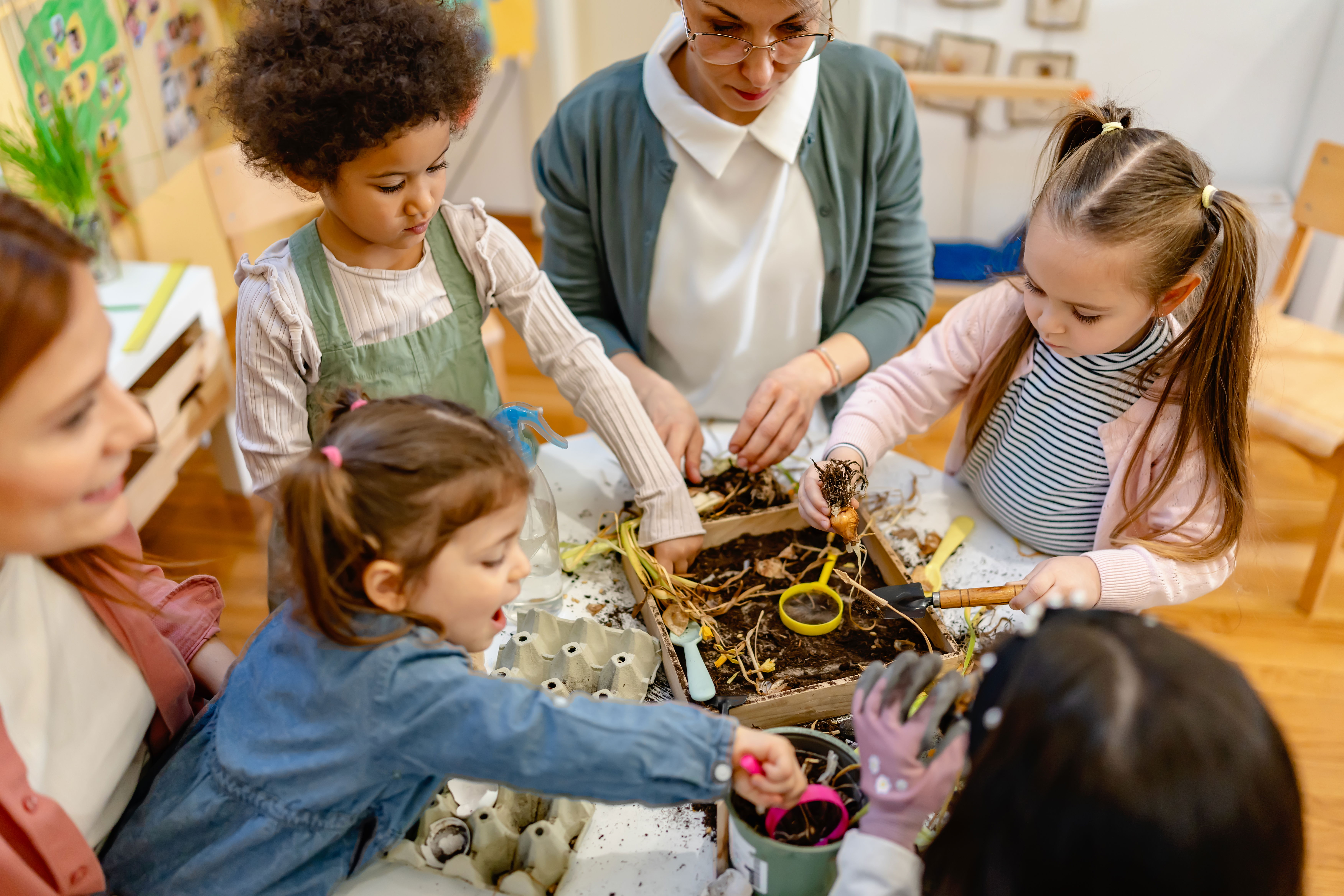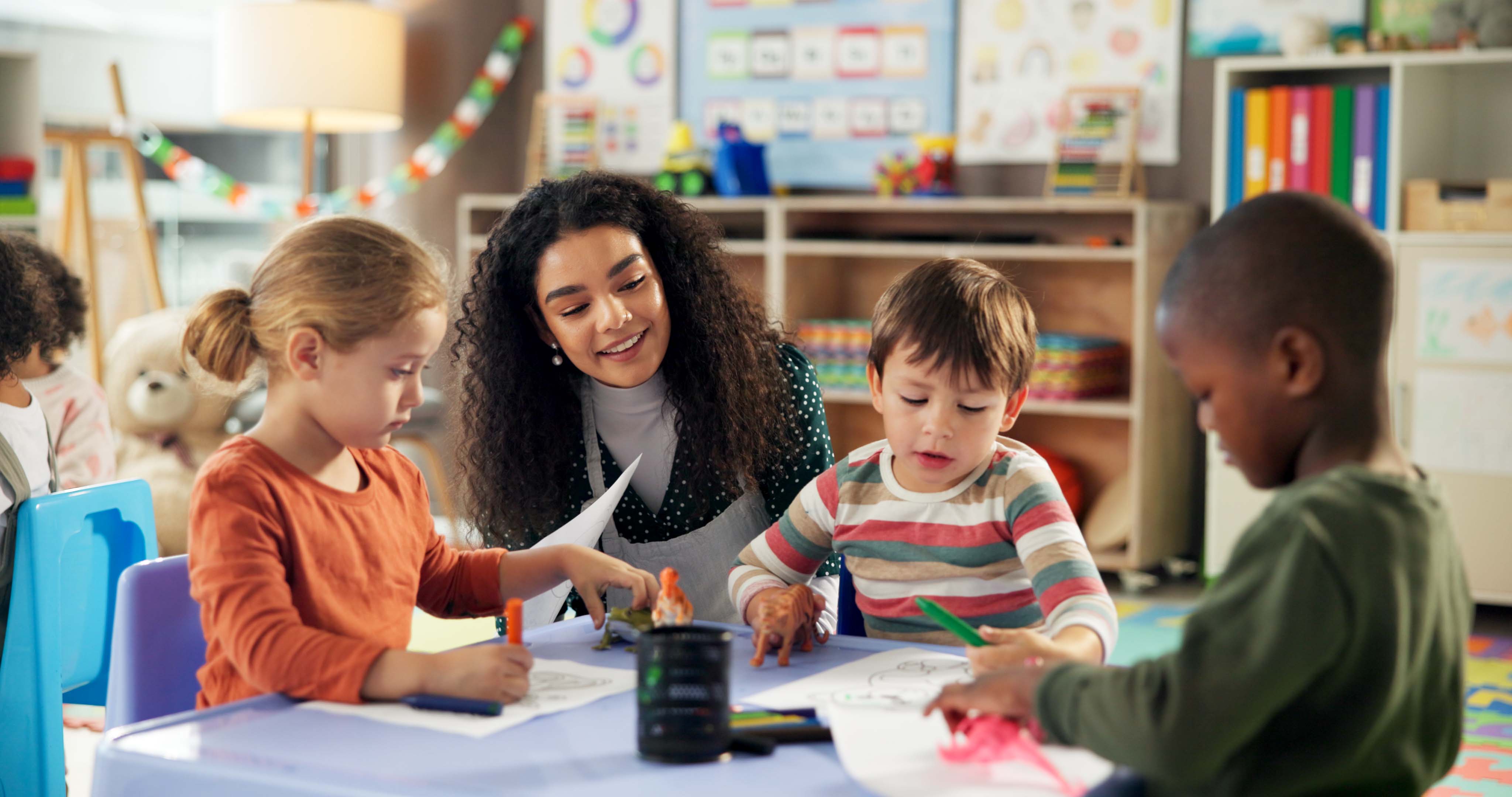
Do you have a child in your classroom who acts aggressively with their peers, says “no” to everything you ask them to do, or maybe they cry on and off All. Day. Long.?
If you’re struggling to reach one of your young students, you’re not alone. I’ve worked in preschools as a teacher and consulted with other teachers for over 20 years and I can tell you that in pretty much every classroom, every year there is at least one child who is having a hard time.
Kids might have difficulty as soon as they start in your classroom, or after some type of change: either at home or at school or even just because they are growing up!
As you’ve, no doubt experienced: young children’s feelings are almost always expressed through behavior. This means that when challenges occur and kids feel scared, frustrated, sad or lonely, they will probably have a hard time telling verbally and in a way that is easy to deal with in a group setting.
Some of the common “triggers” that can lead to challenging behavior that we see are:
-Differences in the expectations or rules at home and school
- A change at school: new teacher, difference in the environment, change in kids present
-A change at home: new sibling, a parent sick or away, moving to a new residence, etc
-They are having a developmental “leap”: dropping a nap, increasing independence, etc
-They’re not able to do something they would like to do
-The demands on/ expectations don’t match their abilities or interests
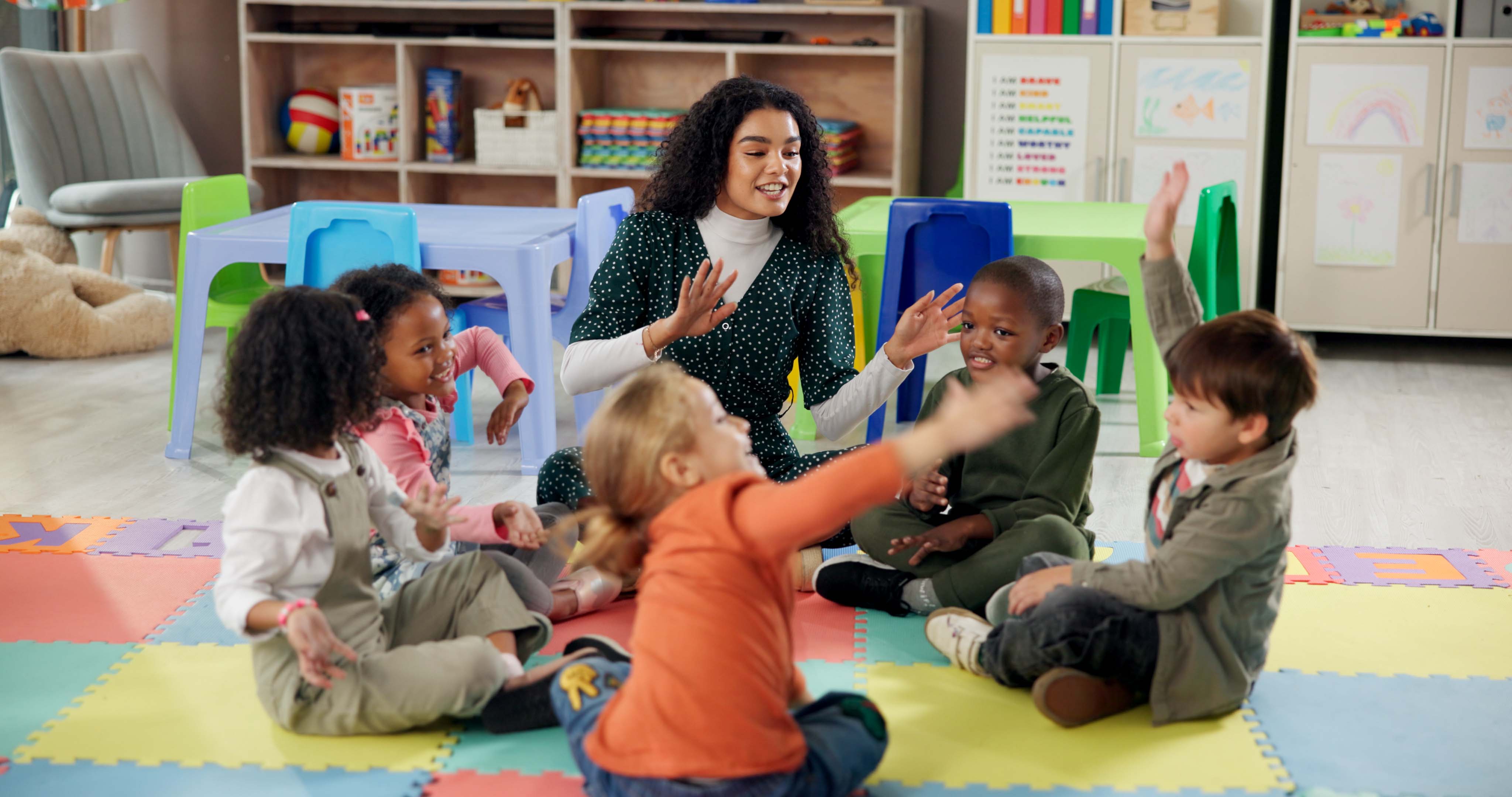
Inclusion means making sure that children with all different learning needs and abilities included in all the opportunities your classroom provides!
This can be challenging, but we're here to tell you: it’s worth it! According to the NCCP at Bank Street School of Education and Division for Early Childhood there are a number of proven benefits including:
-Non-Disabled children had increased “helpfulness”, life skills such as empathy and emotional understanding, more positive attitudes towards disabled people.
-Disabled children had reduced autism severity scores, increased language development, increased social skills, increased peer interactions.
-Inclusive programs had higher program quality scores.
The learning environment absolutely has an impact on children’s ability to engage, recover, and learn new skills! You’ve probably noticed this in your school.
This is because they are reacting to the environment they are in! You may have heard about the concept from Reggio Emilia programs of the environment being considered to be the “Third teacher”, after the child’s family and their classroom teacher/ provider. We often find that making small changes to the classroom environment are some of the easiest ways to improve classroom behavior.
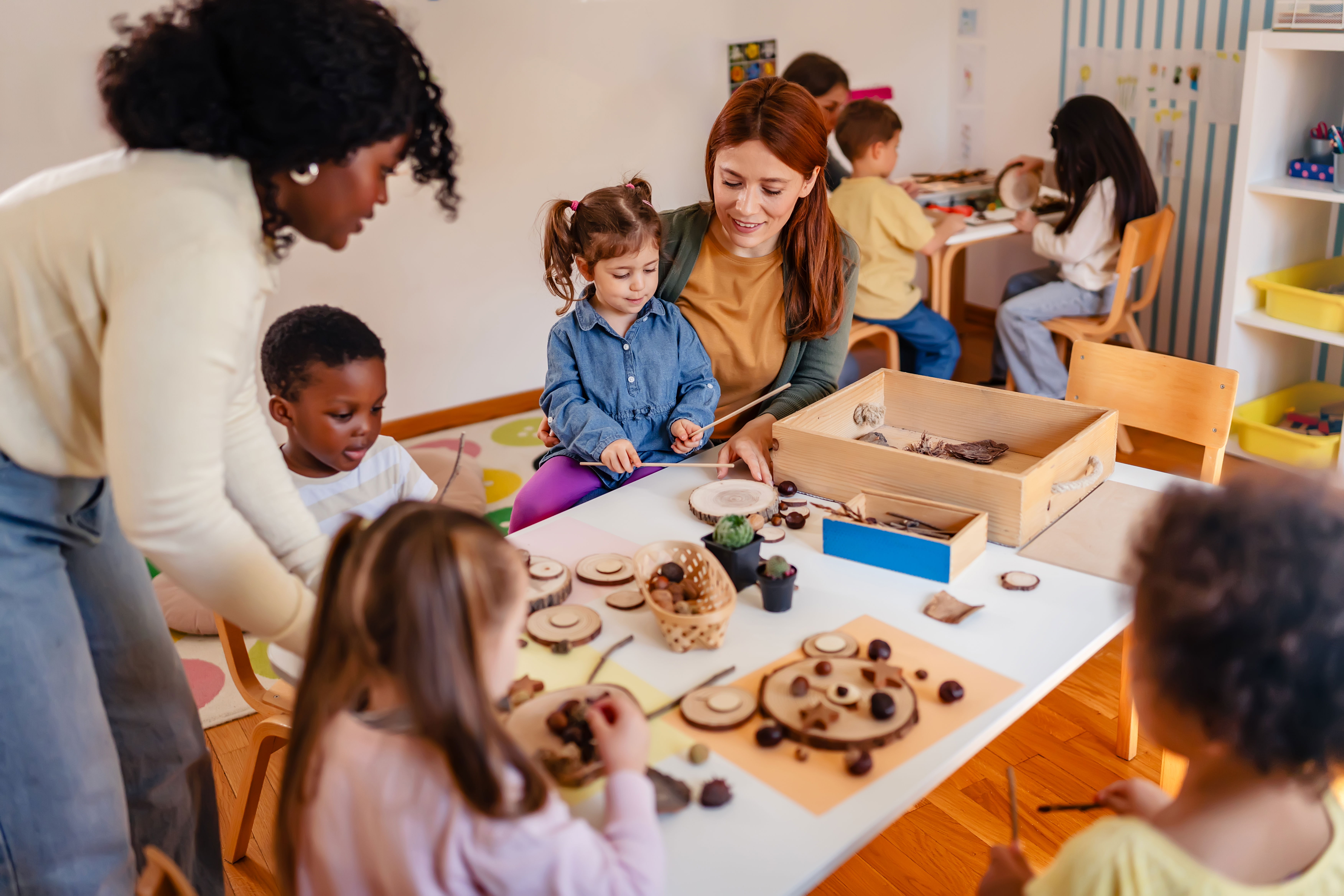
There are a number of ways that classrooms can be intentionally created, teaching children that they are safe, they belong and are valued which is vital to their ability to feel calm so they can learn at school.
Here are a few features that can improve children’s behavior for you to try in your classroom:
-A dedicated quiet space or “calming corner” to go when overwhelmed/upset
-Clear areas for each activity: using shelving, rugs or tables to designate areas is great
-Having the right amount of space for each activity. Aim for 2-4 children in each area
-Focused learning areas located away from active areas: Eg. the Art area separated from dramatic play area…
-Visual aids for daily routines, rules, transitions and any other challenging activity
-Fewer play and learning materials out at one time: include some visual empty space
-Frequently rotating out toys and materials for new/novel ones
-“Open-ended” play materials are available: Blocks, nature objects, playdough, etc
-Wall displays feature the children: Photos of their families, their open-ended artwork…
-Materials available are reflective of the children and their home cultures: Dolls, wall displays, play materials and books include the diversity of the community
-At least some areas of the classroom feature muted colors, lower light, quieter sound levels to reduce overstimulation.
-Having several “copies” of popular objects or toys
-Clear places for materials to be put away: Try labels, icons or photos on shelves
-Spaces for “saving” personal or special objects: Cubbies for each kid and a shelf or counter for teachers to put children’s “works in progress”.
As hard as we might try, we can’t avoid all “triggers” and adding elements to the classroom can’t prevent all challenging behaviors. Some children might need extra time and support to effectively learn and thrive in a group setting, even a very high quality one. Some challenges that may not have been noticeable earlier in life will become more apparent at the preschool, TK or childcare age as well.
You might notice:
-”Asynchronous” development: some skills develop quickly and others more slowly
-Language delays: not able to speak or understand language at the same level as peers
-Motor skills delays: not able to move at the same level as peers
-Social skills delays: having difficulty following the play among peers or having interests that align with much younger children.
-Emotional skills delays: has more difficulty calming down when upset than peers or has difficulty coping with change.
These challenges don’t necessarily mean that anything is “wrong” with the child, that you are not a good teacher or that they are not being parented well… but they can cause frustration for the child as well as challenges for you and the child’s family if they are not addressed directly. It is important to make sure the child is participating in developmental screening.
A report from the Kauffman Early Childhood Exchange found that there are a number of social emotional skills that are important for children to have in preschool that build their resilience and increase positive behavior:
-Confidence
-Capacity to develop relationships with peers and adults
-Concentration and persistence on challenging tasks
-Ability to effectively communicate emotions
-Ability to listen to instructions and be attentive
-Ability to solve social problems
To intervene with challenging behavior it is always important to TEACH these skills first! It can feel challenging or counterintuitive because many of us were taught that we need to prioritize discipline when children do things that are not appropriate. While it is true that we don’t want to send children the message that it is ok to hurt or disrupt others, we also need to teach them the skills that will help them know why and how to do what you want them to do. This way they learn to make good choices, not just go through the motions of good behavior because they are afraid of punishment.
Mental health consultation is an effective, evidence-based strategy that helps all children, including neurodivergent children, high-needs learners and children who may have challenging behavior by supporting the teacher to ask themselves some of the questions we posed above...
Because you care about children, you might have tried other strategies but found that they didn’t work for you. The reason could be that the answers to the questions above are going to be different for everyone! That is what makes mental health consultation different than prepackaged strategies you might find online. Instead of a list of pre-packaged “do’s and don’ts”, a consultant works with you to understand your specific situation and needs and helps you harness your own knowledge and expertise to help the child.
There are several types of early childhood consultation including that which is focused on one specific child and a type which focuses on the program as a whole and how to help it function well.
Programmatic Consultation:
-Is often publicly funded (meaning that you can usually access it for free).
-Focuses on implementing inclusive and trauma-informed strategies as well as working to create environments, policies and procedures to improve success with many children.
- This can be a very effective strategy for larger programs that serve many children.
-Works with either the program director or the teacher but not typically the children or families. Can help guide and support directors and teachers to work with families themselves.
Child-Focused Consultation:
-May be funded via a contract between the school, the family or the child’s health insurance and the consultant.
-Focuses on one child in the classroom that has been identified by the school and/or the parent as having a specific challenge or need.
-Helps the family and the school coordinate their strategies and collaborate more effectively to benefit the child. This can make it easier to tell what is working and to ensure that any further screening or referrals are happening if needed.
-Useful in situations where you think there may be a disability, learning or family need that could require more resources or intervention.
Ideally, this plan will include:
-Background information about the child, family and school
-Reason for referral
-What the family and school has done so far: including what is working and what isn’t
-What the consultant observed and learned from the information gathering process
-Suggestions for the classroom
-Ways for the family to support at home
-Next steps and agreements made by both parties: including any screenings or referrals needed and when they plan to meet next to determine if the strategies are working.
Free Programmatic Consultation can be requested locally at the Center for Early Childhood Connections or by contacting the IECMHC Network which operates a statewide program through the Department of Social Services.
The CECC provides Child-focused Consultation and inclusive evaluations which can help providers, children and their families to find solutions to common challenges. Schedule a free initial consultation and for more information, visit us online.
For children who qualify for Medi-Cal, free support may be available. You can also help the family find support by reaching out to their healthcare provider, by calling or visiting 2-1-1 or by contacting your local Help Me Grow for more information on resources available in your area.