When you enter our offices at the Center for Early Childhood Connections, you’ll notice toys and books in every room.
This is part of creating a welcoming and comfortable space for families, but it also goes beyond that – toys and play are an essential part of how we help kids along their healing journeys.
Using Play to Express Thoughts and Feelings
Children learn best through play. As they engage with toys and create games or stories, they naturally...
In play therapy, trained mental health therapists use the power of play to help kids...
We don’t expect young kids to “talk it out.” It can be hard for even adults to verbally process what they are going through. It can be even harder for kids to express themselves when they are facing a big challenge in their lives.
Play is necessary for their healing because it meets kids wherever they are in their development and allows them to express themselves in ways that feel natural to them.
How Does Play Therapy Work for Children?
By closely observing kids’ play and playing alongside them, Child and Family Therapists gain insight into how kids are feeling and why they are feeling that way. Helping kids:
Child and Family Therapists also help parents and caregivers understand their child’s behavior better. Through play therapy, families can identify what their child needs, and work alongside their therapist to support those needs.
Play therapy is especially helpful because it can uncover the root cause of a child’s behaviors, rather than focusing on a surface-level behavior change. Developing a deep understanding of a child’s concerns allows for more meaningful and long-lasting improvements in their wellbeing.
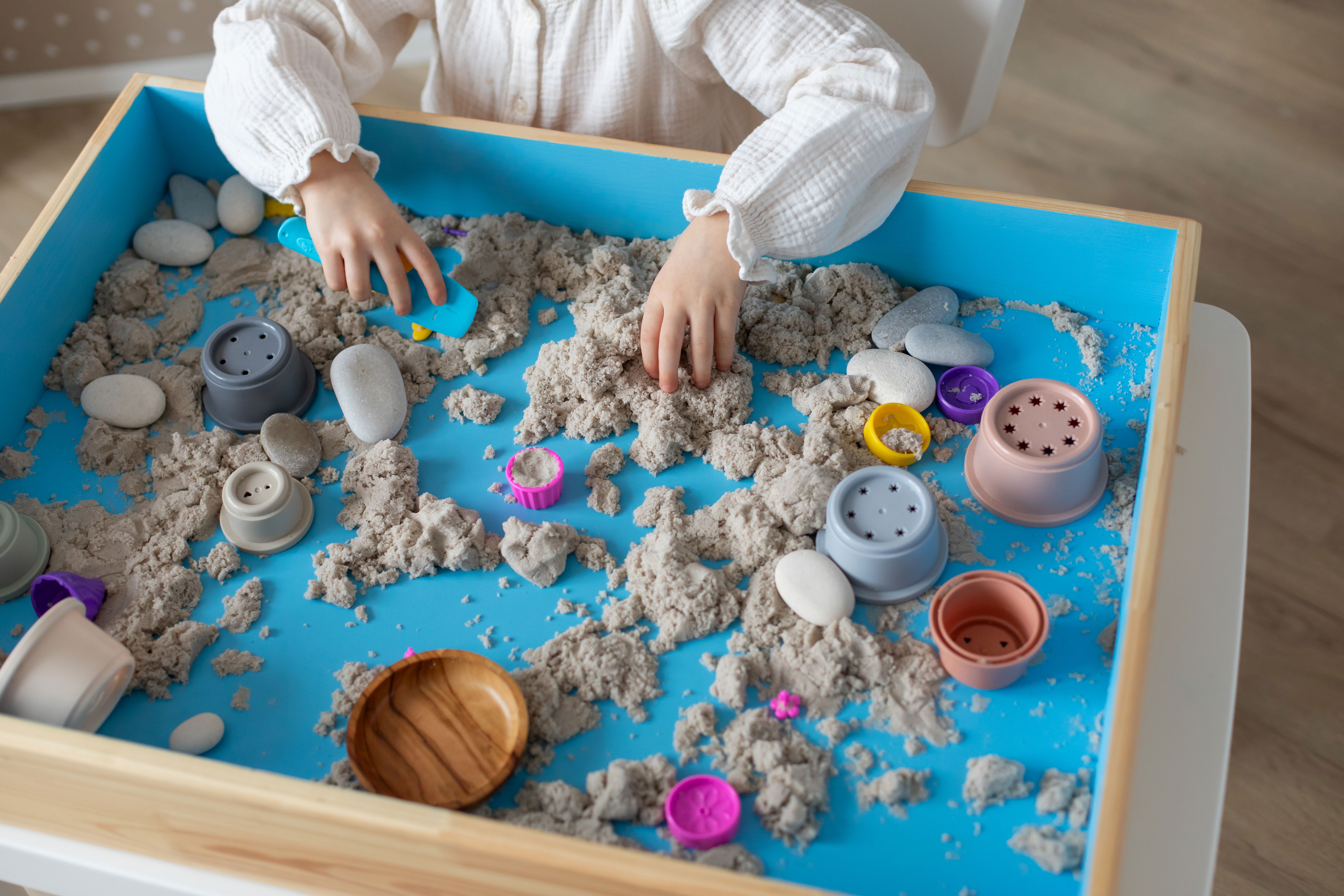
Play therapy is for everyone! It is an evidence-based treatment option for kids across age groups, gender, and mental health concerns.
At the Center for Early Childhood Connections, we use play-based approaches for all our clients from infants through age 8. See our 2025 impact report.
Children Struggling with Anxiety, Depression, and Grief
When kids experience anxiety, depression, and grief, their symptoms interfere with their daily lives. Big feelings like fear, worries, sadness or anger may get in the way of their ability to eat, sleep, focus, and enjoy themselves at school or at home.
Big feelings are uncomfortable and distressing, and kids will try many strategies to manage them, like:
A Child and Family Therapist will support children and their families to understand feelings without getting overwhelmed by them. Then they work together to develop new strategies so they can feel confident and strong even when things are difficult.
Addressing Behavioral Issues and Social Skills Difficulties
There are many different reasons why a child may struggle with making friends, following directions, or other behavioral and social-emotional concerns.
Using play, Child and Family Therapists work closely with each family to figure out what's motivating the child’s behavior:
This can give important information about the root causes of the behavior, so that together in therapy, a plan can be developed to address the child and family's specific needs and ways of being. Using playful interventions like dolls, puppets, books, and board games, kids will practice new, healthy strategies for getting what they need.
Supporting Parents and Caregivers
When kids have big feelings and behaviors, it's normal for any parent or caregiver to feel overextended and overwhelmed. Parents and caregivers often express feeling:
Child and Family Therapists know how challenging it is to navigate these pressures. They see their role as walking alongside parents and caregivers as well as children. Seeking help for one's child is an act of courage and love, and caregivers deserve to feel encouraged and supported too.
Child and Family Therapists help parents and caregivers by:
--> Kids thrive when their adults are well supported!
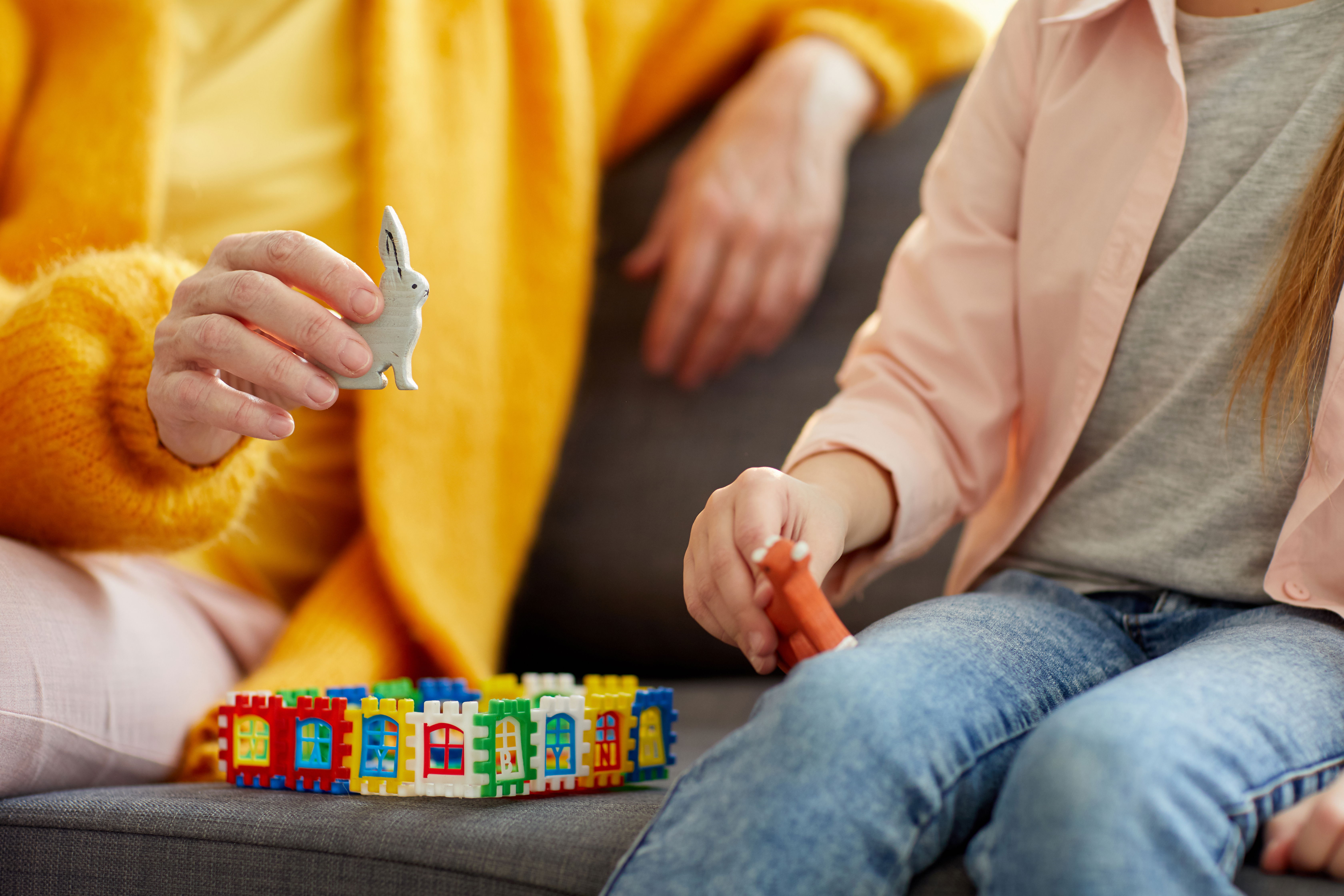
Often, families come to therapy when there is a significant disruption to their daily lives such as recurring behavioral issues at school or at home. It can be tempting to look for fast solutions, like social skills training or immediate behavioral strategy recommendations.
However, fast solutions to behavioral problems can be like noticing your plant is wilting and watering it. Child therapy is learning how to give your plant the right lighting, water, and soil to thrive over time. Therapy is a deeper process that can take time but often leads to significant and comprehensive improvements in the child’s wellbeing.
Research indicates that play therapy helps children:
Reading through these benefits of therapy, you might notice how therapy has a wide range of benefits for not just the child but the entire family’s wellbeing. The effects can ripple outward across multiple areas in children’s and families’ lives.
Learn more about how therapy can support your family’s growth and wellbeing.

When searching for a therapist for your child, you might find yourself overwhelmed by the choices and sea of faces on directories like Psychology Today.
It can be helpful to have some ideas about what information to use to filter your options.
Some things we recommend looking for and asking about include:
The biggest predictor of positive outcomes in therapy is a strong therapeutic relationship. You can prioritize searching for someone that you feel comfortable with and think your child will be comfortable with. You might get a sense of this by looking through a therapist’s or organization’s website, or by reaching out directly to a therapist to schedule a consultation call.
Some questions you can ask yourself include:
At the Center for Early Childhood Connections, we aim to provide diversity-informed, culturally-attuned, and inclusive therapeutic and educational supports to Bay Area families.
Learn more about our approach and supports: contact us today.
-->What ages does the Center for Early Childhood Connections specialize in?
Our organization focuses on children from birth to 8-years-old, as well as their parents and caregivers. Our team is trained and experienced in supporting families with infant and early childhood mental health, early childhood education, and parenting.
-->What should we expect from a first therapy session?
At the Center for Early Childhood Connections, we believe that children heal in the context of their family relationships. Because of this, it is really important for us to get to know you and your child well.
Therapists might begin with one or more parent-only sessions. This gives parents the space to describe what has been happening for their family. The therapist will want to learn about your family dynamics, challenges you have faced presently or in the past, and your hopes for what your child will gain from therapy. These sessions are the foundation for the planning to support your child.
Next, the therapist will schedule a first session that includes the child. Therapists will work with families to determine the best way to support them. Therapists may plan to see caregivers and children together or parents and children separately depending on their circumstances.
During this initial sessions, the therapist will both observe and play, allowing exploration of the playroom and building an understanding of what therapy is and why it can help.
Would you like to learn more about how therapy might help your family? We'd love to hear from you! Speak to a team member by sending us an online request or calling us at 510-438-1996