Recognizing the Signs: Common Child Anxiety Symptoms
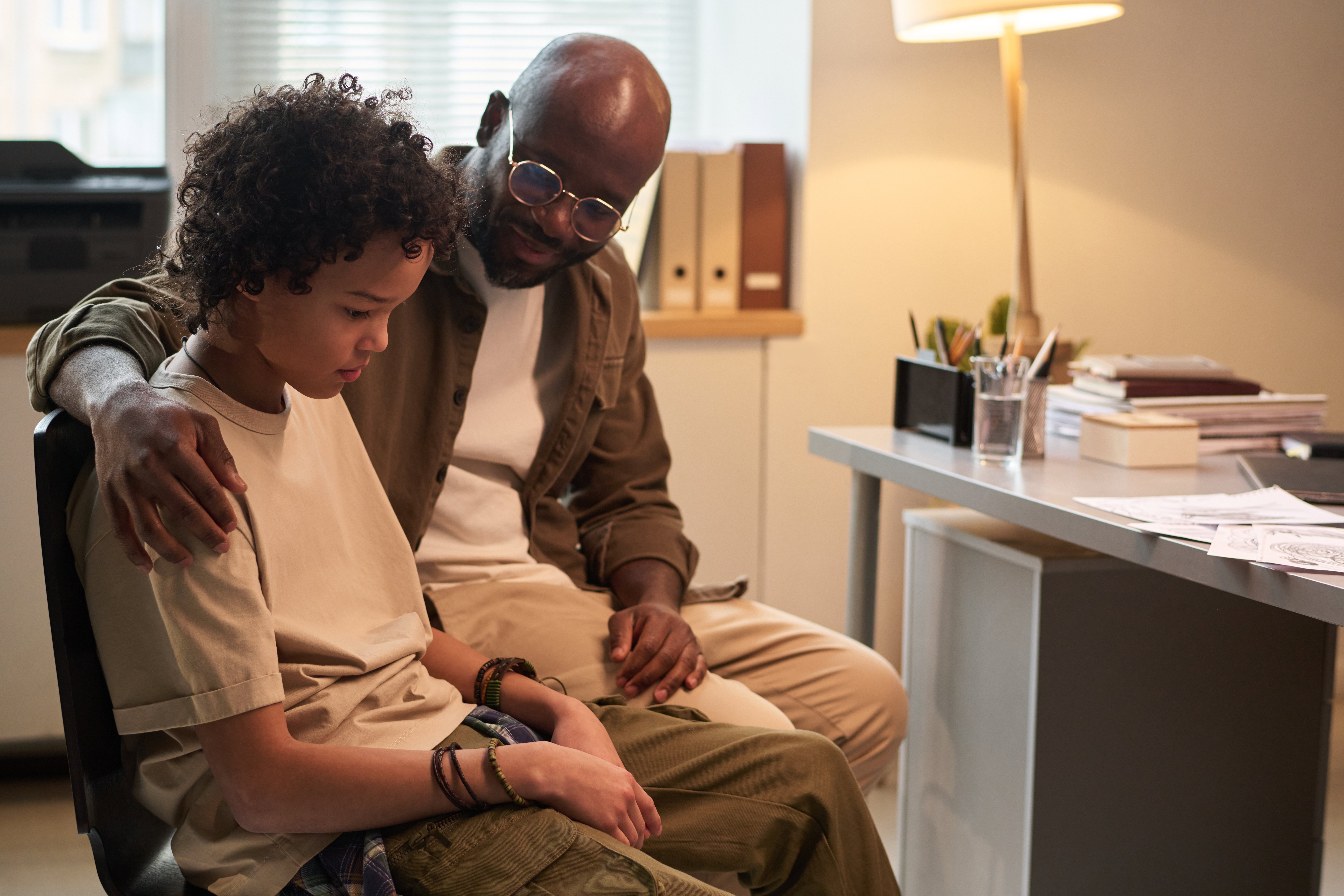
Recognizing anxiety in young children isn’t always straightforward. This is because kids are still developing their emotional vocabulary. Most often, they can’t tell us when they’re feeling stressed and overwhelmed.
Instead of telling us, kids will show us what they are feeling through their behavior. Behavior is a child’s language and clues us in to their underlying needs.
By looking for behaviors expressing stress, parents and caregivers can notice their kid’s feelings and intervene to support their child. Let’s look over some of the ways that stress shows up in a kid’s behavior.
Behavioral and Emotional Signs of Stress
Young kids may show us they are feeling stressed by:
- Clinging to a loved one: Following a parent or caregiver from room to room, hiding behind their legs, becoming a “Velcro-kid” in new situations
- Seeking reassurance: Asking a parent or caregiver the same questions over and over. “When is mom coming home?” “When will you pick me up from school?” “Am I doing this right?”
- Avoiding some situations: Trying to get out of going places (school, the car, the park, birthday parties) that feel scary to them
- Sliding back into younger habits: Picking old habits back up, such as thumb-sucking, wetting the bed, or using baby talk.
We can also look at kids’ emotional states to identify signs of stress. This might show up as:
- Big worries: Asking a lot of “what if” questions about fears, like “what if you don’t come back?” or “what if I can’t do it?”; sometimes this becomes a more imaginative line of questioning like, “what if a shark came in by room and bit me while I was sleeping?”
- Emotional sensitivity: Crying more easily than usual or feeling upset by things that seem small or minor
- Rigidity: Needing things to be “just so,” becoming very upset if the routine changes even slightly
- Irritability: Having a “short fuse” or seeming “prickly” possibly due to exhaustion or overwhelm
Physical Signs of Stress in Children
Stress activates our nervous system’s “fight-or-flight” response which prepares us to respond to scary situations.
In kids just as in adults, being “stuck” in fight-or-flight affects our body’s ability to digest, sleep, and relax. This might look like:
- Tummy troubles: Frequent stomachaches, butterflies, or nausea
- Sleep struggles: Difficulty falling asleep or staying asleep, more frequent nightmares, needing more reassurance at night
- Restlessness: Fidgeting, having shaky hands, or struggling to sit still (might look similar to high energy)
- Muscle tension: Clenched fists or jaw, hunched shoulders, or headaches
Understanding the Root Causes of Childhood Stress
Anxiety isn’t necessarily a bad thing. It is a system all people have, and it serves to alert us to danger. It activates our nervous system responses to help us avoid or escape danger when needed.
However, anxiety can become a challenge if a child gets “stuck” in survival mode. This means that they experience long-term feelings of being in danger even when there isn’t an actual threat to their survival.
Anxiety can be triggered in young kids in reaction to external events or internal experiences.
External events that can trigger anxiety and stress include:
- Big changes: moving to a new home, starting at a new school, adjusting to a new custody schedule
- Scary events: losing a loved one, being hospitalized, being involved in a car accident or break-in, surviving a natural disaster, or even seeing something on the news
- Family stress: sensing or witnessing conflict between family members, separation, financial instability
- Unmet needs: being in an environment that isn’t a good match for a child’s sensory needs, needs associated with neurodivergence, or any other needs that aren't regularly being met
Sometimes, a child can feel anxious even without an external reason. In these cases, their anxiety is triggered by internal experiences like:
- Worry
- Self-doubt
- Lack of confidence
- A very active imagination
At the Center for Early Childhood Connections, we know the best way to heal childhood stress and anxiety is with strong, supportive relationships. We also know that parents and caregivers carry a lot of worry when their child is struggling. Below, we’ll go over some of the things parents and caregivers can do to support their kid with anxious feelings.
What to Say to an Anxious Child: Communication Tips
Validating Feelings Without Empowering the Fear
It can be difficult for parents and caregivers to know how to respond to their child’s anxious feelings. Parents often feel torn between:
- Wanting their child to feel comforted and reassured
- Wanting them to know that there is no real danger and they can manage on their own
There are risks involved in leaning too much toward one approach or the other. If we focus exclusively on reassuring an anxious child, we might reinforce their fears by confirming the child’s belief that they can’t handle their distress and that they should continue to avoid what they are afraid of.
However, if we go the opposite direction and focus entirely on denying their fears and urging them onward (“it’s not scary! Go do it!”), we risk conveying a message that the child’s feelings are wrong. Over time, this can lead kids to think there is something wrong with them or that their parents and caregivers don’t “get” them.
Thankfully, there is a middle ground between these two extremes!
We can offer statements of support that validate the feeling AND encourage our child to be brave.
This might sound like:
- validate: "I know you feel nervous to go down that slide, it is big and feels scary!"
- encourage: "You are strong and I know you can do it if you want to try!”"
- validate: "I think you feel scared because there are a lot of new people at this party, and that is overwhelming."
- encourage: "We can be brave even when we’re scared! I think you’ll feel better after you get used to the crowd.”
Along with this, anxious children often need to hear that you can still be brave even when you feel afraid.
Kids usually picture fearless heroes as the height of courage and imagine that feeling fear means they can’t be like those heroes. We can broaden their definition of bravery by telling them that most people feel fear before doing something new or challenging. Courage comes in when we do it anyway, even if we’re scared!
Using Active Listening With Your Child
Active listening is a great way to show anyone – kids and grown-ups alike! – that we care about what they have to say.
Parents and caregivers show active listening when they:
- Give their full attention with no distractions
- Get down on their child’s level and make eye contact
- Repeat back what they understand about how their child is feeling, e.g., “It sounds like you felt sad when Sophie took your toy today.”
It can be really hard to stop what we are doing to give our kids full attention when we are busy, cooking a meal, checking our phones, etc. However, active listening doesn’t need to be a long and drawn-out matter. It is a quick, focused moment of full attention.
Active listening builds trust between kids and their caregivers by showing that we have the capacity to listen to and understand their feelings.
This is especially important for anxious children, who often need extra reassurance that they are lovable even with all their fears and big feelings and that the grown-ups around them can handle their feelings.
Effective Coping Strategies for an Anxious Child
There are many different coping strategies that can help a child experience relief from anxious feelings. Just like for grown-ups, some strategies will work better than others based on our personal temperaments, interests and preferences.
Finding effective coping strategies means experimenting until we find the right fit for each kid.
Grounding Techniques: The 5-4-3-2-1 Method
The 5-4-3-2-1 Method is a mindfulness exercise that draws our attention back to the present moment. Anxious feelings pull us into an imaginary future where things are going wrong. Anchoring ourselves back into the present is an important way to counteract anxiety.
This method tends to work well for kids (and adults!) because it uses our senses, which is an easy way to focus back in on the present.
To help your child practice the 5-4-3-2-1 Method, guide them to identify:
- 5 things they can see
- 4 things they can feel (you can encourage them to touch different textures like their clothing, the floor, a rug, etc.)
- 3 things they can hear
- 2 things they can smell
- 1 thing they can taste (this one might be a good launchpad for a snack – which can’t fix all problems, but might help your child feel better!)
Deep Breathing Exercises Designed for Kids
Deep breathing has become a go-to suggestion for helping kids cope. This is because deep breathing activates the part of our nervous system that gets us back to a relaxed state.
Our goal with deep breathing is to teach kids to take a nice, big breath in, and then a long breath out.
Some ways to teach this to your child include:
- Stuffie Belly Breathing: Have your child lay on their back and place a stuffed animal or toy on their belly. Then, guide them to breathe in slowly to make the stuffie rise, and then breathe out to lower it back down.
- Balloon Breathing: Have your child place their hands on their head, then move their hands up to “inflate” the balloon as they breathe in, and back down to deflate the balloon as they breathe out.
- Five-Finger Breathing: Have your child trace their fingers on one hand, breathing in as they trace up and breathing out as they trace down. This is a good one to teach for kids who experience anxiety at school, as it is easy to do in a classroom setting.
There are many ways to teach deep breathing, but the two essential points are:
- Teach it when they’re calm: choose a time when your child is already relaxed to practice deep breathing. This will help them build some “muscle memory” around breathing so they can use it later when they need it!
- Make it fun: you can tailor the approach to your child’s interests – whatever works to engage them in the process! A deep breath can be a ninja breath, a dragon breath, a princess breath, a puppy breath…
Progressive Muscle Relaxation for Physical Tension
Progressive muscle relaxation is a process that guides us to squeeze and release different muscles in a sequence.
This is an important practice for anxious kids (and adults!) because anxiety often causes physical tension in the body (e.g., shoulders, neck, etc.). However, it can be hard to notice or know how to release that tension. Progressive muscle relaxation “tricks” the muscle into relaxing by intentionally squeezing and releasing it.
For kids, this can be a good one to practice at bedtime, when they are already laying down and getting ready for sleep.
At first, you can follow a script such as our guide to Ideas for Calming With Your Child, available for a free download right here:
Once you get the hang of it, you may enjoy turning this into a moment of connection by creating your own stories to guide your child through progressive muscle relaxation.
Creating a Supportive Home Environment
The Importance of Predictable Routines and Schedules
Young kids love repetition! Repetition offers kids opportunities to practice skills and feel safe in knowing what’s ahead. This is a big part of why they will ask you to read the same book or sing the same song over and over again.
Repetition is especially important for kids with anxious feelings, who feel more reassured when they know and feel prepared for what’s coming.
A great way to support your child’s preparation is to have a predictable home routine. This means that home life follows a similar rhythm and pattern most days, and your child is most often able to guess what comes next. For example, they may learn that bedtime means: taking a bath, brushing teeth, putting on pajamas, bedtime stories, then nightlight and sleep.
Routines don’t have to be rigid schedules happening at the same exact time every day. They just need to be roughly the same steps in roughly the same order for “anchor points” in the day like meals, bedtime, and getting ready to leave the house.
To support your child’s understanding of what will happen in a day, you can use visuals like:
- Picture schedules: picture schedules show a photo or drawing to represent the parts of the day, so a kid can reference what will happen next.
- A picture checklist for leaving the house (brush teeth, put on shoes, fill water bottle, etc.)
- A simple calendar showing if they’ll be at home or at school today and tomorrow.
Is this an area where you’d like some support? Our parent consultations are a great way to work with a mental health specialist to make a plan for your household. You can set up a parent consultation by reaching out to us here.
Setting Realistic Expectations and Boundaries
Along with benefiting from predictable routines, kids need a clear set of expectations for their behavior and gain a sense of safety from knowing what is expected of them.
Parents and caregivers can support their anxious child by setting expectations that:
- Break things down in small, achievable steps using specific language to describe the tasks your child needs to complete. This gives kids the information they need to be successful, rather than a vague ask like “behave.” Behaving well looks different in different situations so we need to teach what that looks like, e.g., using an indoor voice in the library, putting shoes away after getting home, etc.
- Provide gradual “ins” into intimidating situations: we can support anxious kids by giving them time to warm up to things that feel scary to them, e.g., watching other kids at the playground, then going to play after a few minutes. This gives kids a structure that they can eventually use independently to observe and then engage when they are ready.
- Give time for big feelings: this one can be tough, because kids’ feelings tend to bubble up right when it’s crunch time (e.g., time to leave the house, out in public, etc.). This can make us feel like we need to “fix” the feeling or get around it. However, wherever possible, we want to give kids a moment to feel their feelings before looking at options for how to deal with them. This might sound something like: "I see you’re feeling upset right now, you wanted to wear a different pair of shoes. Let’s take a minute to feel sad about it, and then we can try a deep breath or a hug.”
- Hold boundaries around “nonnegotiable” behaviors: We want kids to understand that all feelings are valid but all behaviors are not. Nonnegotiable behaviors include anything that we need our child to do and can differ according to each family’s needs and values. Some common ones would include going to school, brushing teeth, visiting family members, etc. To validate feelings while upholding boundaries, we might say something like, “You wish we didn’t have to go to school today. It’s ok to feel mad, but we are still going to school. You’ll have a home day this weekend.”
Let’s take a moment to recognize that it can be very difficult to strike a balance with anxious kids. Parents and caregivers often find themselves caught between:
- wanting to be gentle and accommodating with their child and help them with their distress
- wanting their child to be strong and independent
If you are finding this to be a particularly stressful part of parenting, we would recommend exploring a parent therapy like Supportive Parenting for Anxious Childhood Emotions (SPACE). This program focuses on helping parents support their anxious child while also guiding them toward resilience and independence. We’ll describe it further below!
Modeling Healthy Stress Management as a Parent
We live in a world that places a ton of pressure on parents and caregivers. So many families feel stressed and overwhelmed.
Many parents we work with express feeling:
- guilty because they are living with high levels of stress
- worried about how this will impact their child
We want parents to know that feeling stressed and burnt out does NOT mean you are a bad parent. Rather, it means that you need more resources and support.
The Center for Early Childhood Connections knows that supporting parents and caregivers is essential to helping kids and families thrive. Don’t hesitate to reach out to us to discuss programs to support your needs!
This brings us to some ideas for modeling healthy stress management as a parent. We can set a good example for our kids by:
- Reaching out for help when we need it – let’s normalize calling on our support systems (friends, family, community, therapists, etc.) instead of carrying all the weight alone.
- Naming how we are feeling – labeling feelings is a big part of emotional awareness. Acknowledging how we feel (e.g., frustrated, sad, tired, overwhelmed) models this for kids!
- Narrating how we respond to emotions – we can “think out loud” to show kids the process we use to decide what to do about a feeling; or tell stories about how we responded to frustration or sadness during the day.
- Making choices that protect our wellbeing – parents and caregivers can model self-care by safeguarding the habits, hobbies, and time they need to feel like themselves. This may mean protecting some time alone each week whenever possible!
Helping Kids Deal With Stress in School and Social Settings
Collaborating With Teachers and School Counselors
For kids who experience anxiety, school can be particularly challenging. Navigating peer relationships, academic expectations, and the many demands of a full day of school is a big ask!
Parents and caregivers can support their child by:
- Letting the teacher know about their child’s anxiety. This helps the teacher keep a closer eye on your child and opens the conversation for them to share what they observe about your child, what is working in the classroom, and what support needs they identify throughout the school year.
- Asking about resources within your school community: Some of the services available through your school may include
- Early Childhood Mental Health Consultants who support kids, families, and educators in early care settings and preschools
- School Counselors and/or School Social Workers who can support your child at school, liaise with school staff, and connect you with resources for your child
- School District Services such as School Psychologists or School-Based Therapists may also be available to provide evaluations and therapy on site at your child’s school
Managing Separation Anxiety During Drop-Offs
School drop-offs can be especially tricky for kids with anxiety. Separating from parents and caregivers for the day may leave kids feeling vulnerable and sad, and this might show up in anything from tears to tantrums.
Some ways to manage this include:
- A predictable morning routine: Try to follow the same steps in getting ready for the day (wake-up, breakfast, get dressed, brush teeth, etc.)
- A goodbye ritual: You and your child can work together to create a special way of saying goodbye, like a secret handshake or a certain number of hugs and kisses. It can be helpful to give your child a bit of control in these moments, like saying they can choose a number between 1-5 for how many hugs/kisses/etc.
- Discussing goodbyes and separation during bedtime: Many kids need to hear that their parents and caregivers think about them throughout the day. You can choose books to read together on this theme, like The Kissing Hand by Audrey Penn or The Invisible String by Patrice Karst.
It is really hard for parents to say goodbye knowing their child is dealing with big feelings. Whenever possible, try to think about the school staff who will be there for your kid, and give yourself a few minutes of calm before continuing on with your morning!
Navigating Social Triggers and Peer Pressure
Kids who experience anxiety often worry about social situations like initiating or maintaining friendships and navigating conflict with peers.
As parents, we often want to “fix it” for our child. It is so hard to hear young kids talk about situations where they experienced embarrassment, rejection, or other social challenges!
We can support our kid’s social navigation by turning the challenge into a learning opportunity:
- Reflect on emotions: What your child felt, what the other kids may have felt
- Problem-solve together: What could your child do next time? Who could they ask for help? Are they open to a suggestion from you?
- Convey confidence in your child’s strength and problem-solving: Make sure to close in a way that shows your belief in your child’s ability to handle the situation! This may sound like, “You are scared that your friend won't want to play with you after your fight, but I know you’ll figure it out!”
When to Seek Professional Help for Child Anxiety
Differentiating Between Typical Worries and Anxiety
Every child experiences worry and fear at some point in their lives. These emotions have a purpose in helping humans be prepared and anticipate what they may need in the future.
So how can we tell when everyday worries and fears have become anxiety?
Some questions to ask yourself include:
- How frequently is my child feeling worried/afraid? Has my child been feeling worried/afraid consistently over many months?
- Are my child’s fears keeping them from participating in important parts of their life, e.g., friendships, school, sports, etc.?
- How much time am I spending supporting them with their fears? Is this sustainable for our family?
As you reflect on these questions, you will gain a sense of how much of an impact the worries are having on your child’s life and on your family life. If the worries feel significant to you and your child, then you are likely dealing with anxiety.
If you have any questions about whether your child needs extra support or what kind of support would be helpful, you can reach out to our therapists at the Center for Early Childhood Connections for a free intro consultation.
During a consultation call, you can explore what support could look like for your family with one of our Child and Family Therapists. Consultations are pressure-free and give you a chance to gather information and ask any questions you have!
Exploring Therapy Options: Play Therapy, Child-Parent Psychotherapy, and SPACE
There are many options for families seeking professional support for their child with anxiety. Exploring different options can help you identify the best fit for your child and family.
Therapies that help anxious kids thrive include:
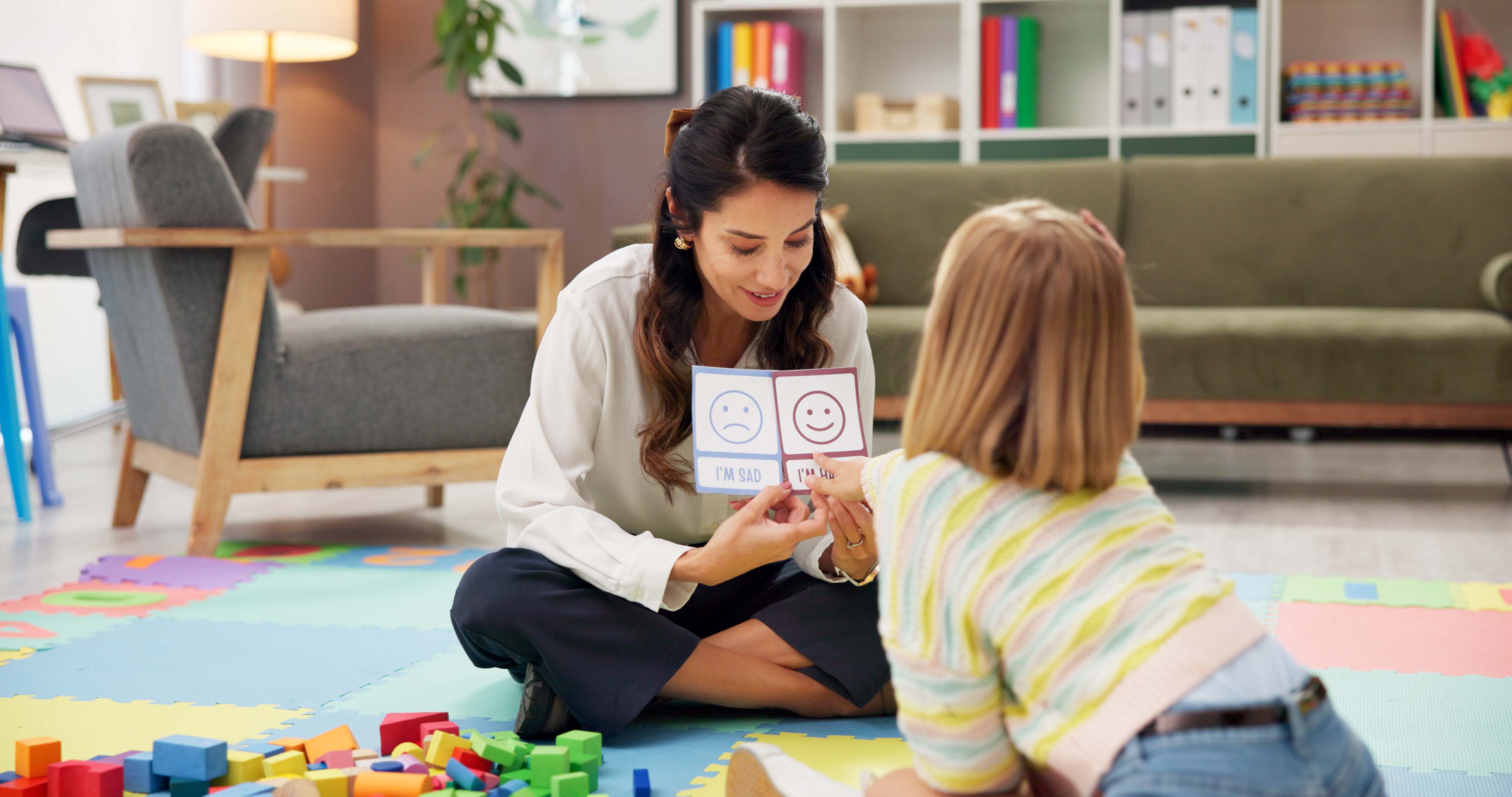
- Play therapy: In play-based therapy, child mental health specialists use toys and art materials to help kids express themselves in a therapeutic environment. A play therapist can help your child feel understood and learn about their emotions and strengths. Your child can explore their fears in a playful environment and become more confident and capable.
- Child-Parent Psychotherapy: In Child-Parent Psychotherapy, kids attend sessions with their parent or caregiver. This is a flexible family therapy for young children (0-5) where a trained therapist supports kids and their parents at the same time. In Child-Parent Psychotherapy, families learn to use the power of their relationships and connections to support a child to build confidence and resilience.
- Supportive Parenting for Anxious Childhood Emotions (SPACE): SPACE is a parent program that helps parents and caregivers learn how to encourage their child without reinforcing their fears. It can be used as a stand-alone intervention or in addition to a child being in therapy too. Parents attend on their own, working with a therapist to address their child’s anxiety in a systematic yet gentle way.
Would you like to learn more about these programs? Reach out to us at the Center for Early Childhood Connections to discuss your family's support needs.
How to Find the Right Pediatric Specialist
When searching for a therapist for your child, you might find yourself overwhelmed by the choices and sea of faces on directories like Psychology Today.
It can be helpful to have some ideas about what information to use to filter your options. Some things we recommend looking for and asking about include:
- Specialized training in child therapy and play therapy: Children process their experiences differently than adults, and require a specialized approach facilitated through play. You can ask a therapist about their training (e.g., Child-Parent Psychotherapy, play therapy, SPACE, etc.) and experience (e.g., prior work with kids in your child’s age group) to determine whether they will be a good fit for your child.
- Commitment to diversity-informed practice: It is important for you and your child to feel understood by your therapist. A big part of this is the therapist’s willingness and ability to understand your specific family structure and cultural context. You can ask a therapist about prior experiences working with communities you belong to and look for therapists who approach their work in diversity-informed ways (e.g., using the Diversity-Informed Tenets for Work with Infants, Children and Families.)
The biggest predictor of positive outcomes in therapy is a strong therapeutic relationship. You can prioritize searching for someone that you feel comfortable with and think your child will be comfortable with. You might get a sense of this by looking through a therapist’s or organization’s website, or by reaching out directly to a therapist to schedule a consultation call.
Some questions you can ask yourself include:
- Do I feel heard and listened to?
- Do they seem to care about me and my child?
- Are they making efforts to make me and my child feel at ease and welcomed?
At the Center for Early Childhood Connections, we provide diversity-informed, culturally-attuned, and inclusive therapeutic and educational supports to Bay Area families. If you would like to learn about our services and approach, you can reach out to our team here.